When I decided to install marble tiles in my kitchen three years ago, I was completely mesmerized by the showroom samples and dreamed of having that luxurious, high-end look in my own home. What I didn’t anticipate was the steep learning curve that came with living on natural stone in one of the busiest rooms of my house.
After dealing with stains, etching, cracking, and countless hours of maintenance, I’ve gained invaluable insights about what it really takes to make marble kitchen floors work. While I absolutely love the elegance and timeless beauty my Carrara marble brings to the space, I wish someone had shared the practical realities with me before I committed to this gorgeous but demanding flooring choice.
Understanding Different Types of Kitchen-Suitable Marble
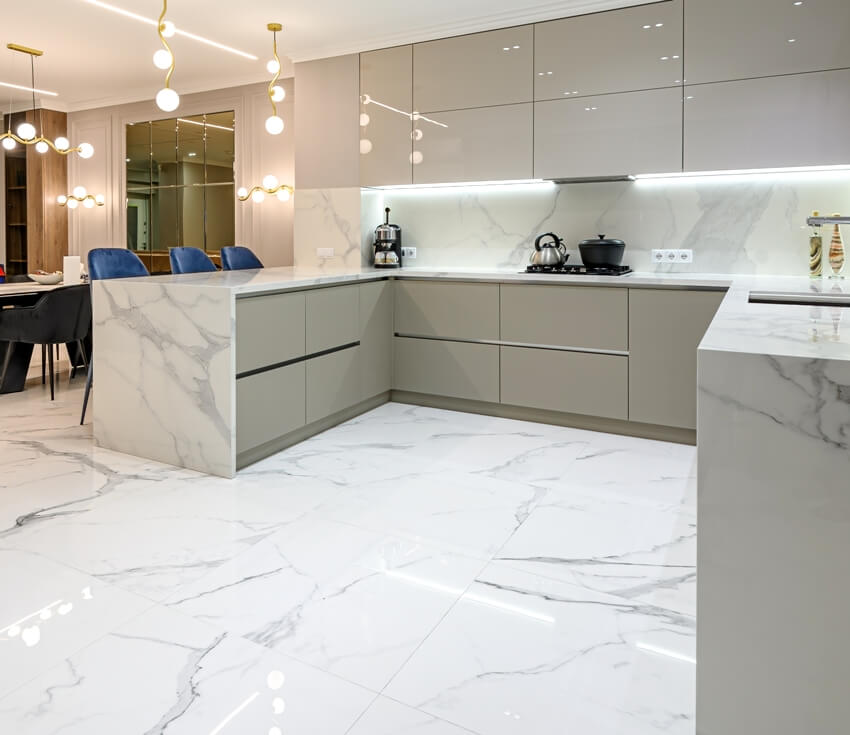
Choosing the right marble for my kitchen involved learning about varieties I’d never heard of before. I initially fell in love with classic Carrara marble for its stunning white background and delicate gray veining, but discovered that its high calcium carbonate content makes it particularly susceptible to acid damage from common kitchen spills like lemon juice, wine, and tomato sauce.
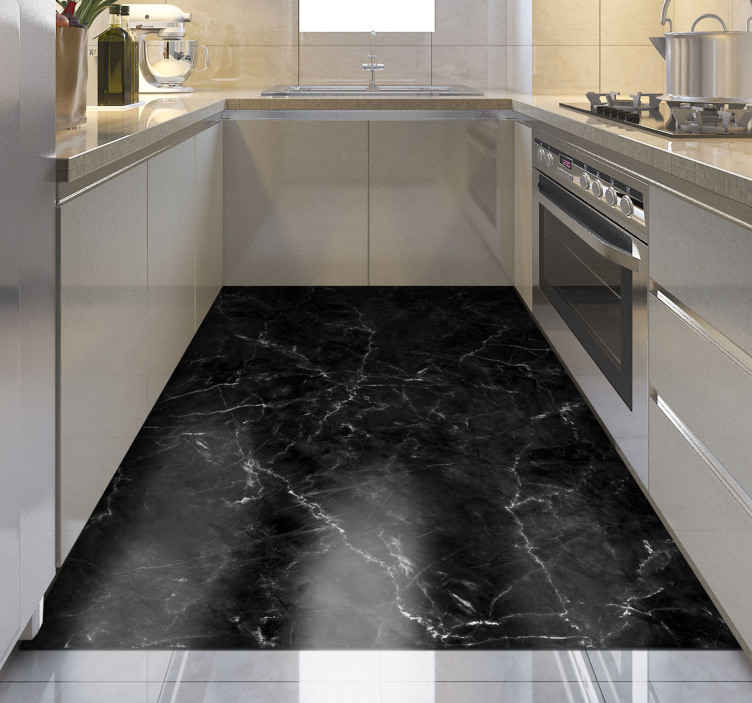
After consulting with several stone specialists, I learned that some marbles perform better in kitchens than others. Darker varieties like Emperador or Green Forest marble tend to hide stains and etching better than lighter options, though they still require careful maintenance. I also discovered that honed finishes, while less glossy than polished surfaces, actually hide minor scratches and etching better in high-use kitchen environments.
The porosity factor became crucial in my decision-making process. I learned that denser marbles like Thassos or certain Italian varieties absorb less liquid than softer stones, making them slightly more forgiving in kitchen settings. However, even the densest marble requires proper sealing and careful maintenance to prevent permanent damage from the inevitable spills and splatters of daily cooking.
Installation Challenges and Professional Requirements
Installing marble tiles in my kitchen proved far more complex than I initially imagined. Unlike ceramic or porcelain tiles, marble requires perfectly level subfloors to prevent cracking under the weight of appliances and daily foot traffic. I learned this lesson when hairline cracks appeared around my kitchen island within six months, requiring expensive repairs and reinstallation.
The adhesive selection became critical for long-term success. My installer explained that marble needs specialized, flexible adhesives that accommodate natural expansion and contraction while providing strong bond strength. Regular tile adhesive can actually cause discoloration or bonding failures with natural stone, a costly mistake I’m grateful my contractor helped me avoid.
Grouting marble tiles requires different techniques than standard ceramic work. I discovered that certain grout colors can stain marble edges, and that epoxy grouts, while more stain-resistant, require special installation techniques. The grout joints also need regular sealing separate from the marble itself, adding another layer of maintenance that I hadn’t considered during the planning phase.

Daily Maintenance Reality Check
Living with marble kitchen floors transformed my daily cleaning routine completely. I had to abandon my go-to cleaning products and invest in pH-neutral stone cleaners that won’t etch the marble surface. Even seemingly innocent products like vinegar-based cleaners or common kitchen degreasers can permanently damage marble, leaving dull spots that require professional restoration.
Spill response became an immediate priority rather than a cleanup-when-convenient task. I learned to keep stone-safe cleaning supplies easily accessible and trained my family to address spills immediately, especially acidic substances. Coffee rings, wine stains, and cooking oil spots became permanent reminders of moments when I wasn’t quick enough with cleanup.
The daily sweeping and mopping routine intensified significantly with marble floors. Grit and debris that might not scratch ceramic tiles can leave permanent marks on softer marble surfaces. I invested in high-quality microfiber mops and learned to use minimal water during cleaning, as standing water can penetrate marble and cause staining or bacterial growth in the porous stone.

Dealing with Stains, Etching, and Repairs
My first major marble stain taught me the difference between surface stains and acid etching. When I spilled red wine and let it sit overnight, the resulting dark stain required a poultice treatment that took several days to complete. I learned to make poultices using baking soda and plastic wrap, leaving them overnight to draw out deep stains from the porous marble.
Acid etching became my biggest ongoing challenge, appearing as dull, lighter spots wherever acidic substances contacted the marble. Unlike stains that can be removed, etching actually damages the marble surface and requires professional polishing to repair. I’ve learned to live with minor etching in high-use areas, budgeting for periodic professional restoration to maintain the floor’s appearance.
Crack repairs taught me about the structural limitations of marble in kitchen environments. Heavy appliances, dropped pots, and natural settling can cause cracks that require professional repair using color-matched compounds and polishing. I’ve learned to identify which cracks are cosmetic and which ones require immediate attention to prevent further damage.
Cost Analysis and Long-Term Investment Considerations
The initial cost of my marble kitchen floor shocked me, even after extensive research. Quality Carrara marble tiles cost $8-15 per square foot, but installation, specialized adhesives, sealing, and finishing brought the total to nearly $25 per square foot for my 300-square-foot kitchen. The investment significantly exceeded my original budget, but the beauty and uniqueness made it worthwhile.
Ongoing maintenance costs add up more than I anticipated. Annual professional sealing costs $3-5 per square foot, and periodic deep cleaning or restoration can run $5-8 per square foot. I budget approximately $500-800 annually for professional maintenance on my kitchen marble, plus the cost of specialized cleaning products for daily use.
The resale value impact remains positive despite the maintenance requirements. Real estate agents tell me that well-maintained marble floors add significant value to the home, often recovering the initial investment plus appreciation. However, I’ve learned that deferred maintenance can actually decrease home value if the marble shows extensive damage or poor care.
Lifestyle Adaptations and Family Considerations
Living with marble kitchen floors required significant lifestyle adjustments that affected my entire family. We had to change our cooking and eating habits, using cutting boards religiously, placing mats under pet food bowls, and being extremely careful with acidic foods and beverages. The learning curve was steeper than expected, especially with teenage children who needed constant reminding.
Entertaining became more stressful initially, as I worried constantly about guest spills and accidents. Over time, I learned to relax somewhat and focus on enjoying gatherings rather than obsessing over potential damage. I keep stone-safe cleaning supplies readily available and address issues as they arise rather than letting worry ruin social occasions.
The comfort factor surprised me positively. Marble stays naturally cool, which feels wonderful during hot summer cooking sessions but requires area rugs in winter for comfort while standing for extended periods. The thermal mass also helps regulate kitchen temperature, though it takes longer to warm up on cold mornings than other flooring materials.

Is marble flooring practical for busy family kitchens with kids and pets?
Honestly, it requires significant lifestyle adjustments. With two teenagers and a dog, I’ve learned to manage it, but it demands constant vigilance about spills and immediate cleanup. Pet accidents and kids’ messes can cause permanent damage if not addressed quickly. Consider your family’s habits carefully before choosing marble.
How often does marble kitchen flooring need professional maintenance?
I have my floors professionally sealed annually and deep cleaned every 18 months. Minor polishing for etching repairs happens as needed, usually 2-3 times per year in high-traffic areas. The frequency depends on usage and how well you maintain daily cleaning routines.

What’s the biggest mistake people make with marble kitchen floors?
Using the wrong cleaning products is the most common error. I learned this the hard way when household cleaners caused permanent etching. Also, many people underestimate the ongoing maintenance commitment and costs. It’s not a “set and forget” flooring choice like ceramic or vinyl options.
Can marble kitchen floors be refinished if they get damaged?
Yes, but it’s expensive. Professional restoration can remove most stains and etching, essentially giving you new floors. However, deep cracks or extensive damage might require tile replacement. I budget for refinishing every 5-7 years to maintain the floor’s appearance and protect my investment.
How does marble compare to engineered stone for kitchen floors?
Engineered stone is much more practical for kitchens, being non-porous and stain-resistant. However, marble offers unique beauty and character that manufactured materials can’t replicate. It’s really a choice between practicality and natural beauty, with marble requiring much more care and attention.
What should I budget annually for marble kitchen floor maintenance?
I spend about $700-900 annually on professional maintenance, plus $100-150 on specialized cleaning products. This includes annual sealing, periodic deep cleaning, and minor restoration work. The costs vary based on square footage and how well you maintain daily cleaning routines yourself.
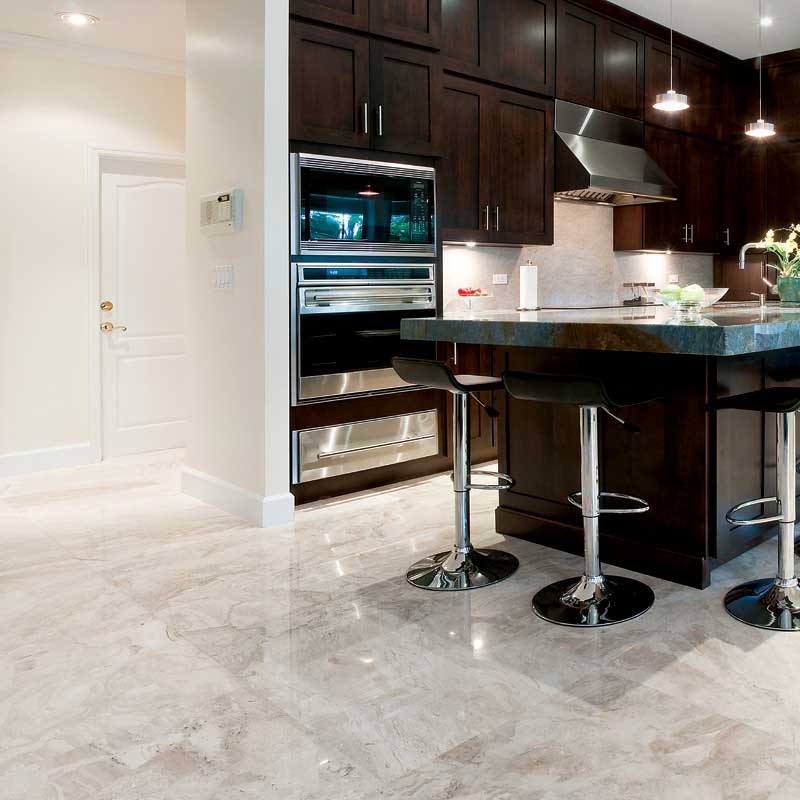
Carrara White Gloss Marble Effect Rectified Porcelain 60cm x 60cm Wall u0026 Floor Tile

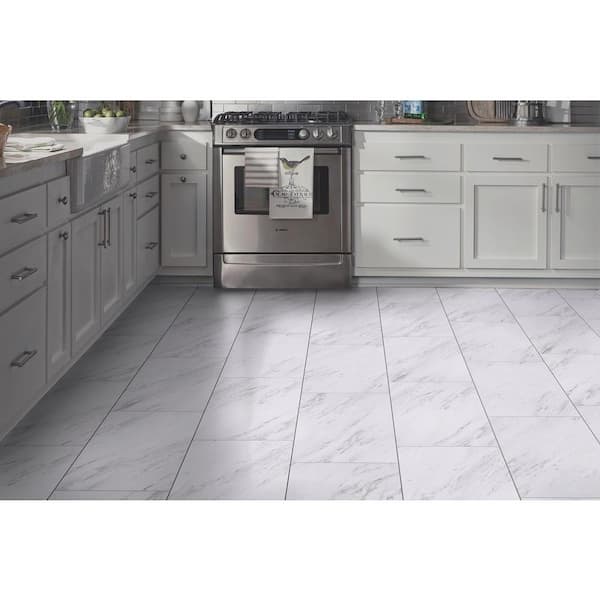
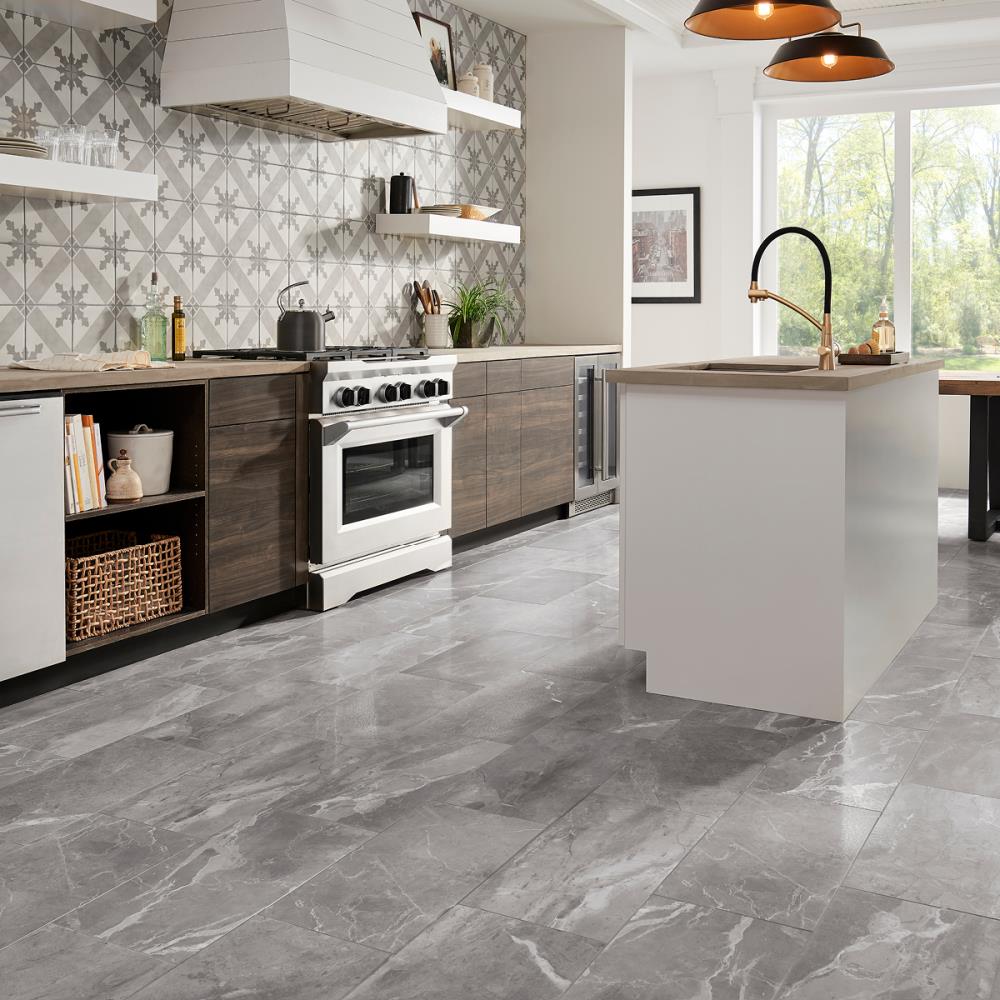
Mohawk ForeverStyle Gray Marble 12-in x 24-in Lappato Porcelain
Related articles: