When I started researching flooring options for my bathroom renovation last year, cork wasn’t even on my radar. I was focused on the usual suspects, tile and luxury vinyl, when my contractor mentioned cork as an alternative. My first reaction was skepticism. How could cork possibly work in a wet environment?
After doing my homework and living with cork bathroom floors for eight months now, I can honestly say it was one of the best decisions I made during my renovation. Let me share why cork might be the perfect flooring solution you never considered.
Understanding Cork’s Natural Water Resistance Properties
One of my biggest concerns about cork was whether it could handle bathroom moisture without warping or developing mold. I was pleasantly surprised to learn that cork is naturally antimicrobial and water-resistant due to a waxy substance called suberin in its cellular structure. This natural coating actually repels water rather than absorbing it, which makes cork far more suitable for bathrooms than I initially thought.
During my research, I discovered that cork has been used in wine bottles for centuries precisely because of its ability to resist moisture while remaining flexible. The cellular structure of cork contains millions of tiny air-filled chambers that provide natural insulation and help prevent water penetration. When properly sealed with a quality polyurethane finish, cork becomes even more water-resistant than many traditional flooring options.
I tested this myself by spilling water on sample pieces and watching how the liquid beaded up rather than soaking in. Even after leaving water on the surface for several hours, the cork showed no signs of damage or swelling. This gave me the confidence to move forward with cork for my bathroom, knowing it could handle the daily moisture from showers and baths without compromising its integrity or appearance.

Installation Process: What I Learned About Proper Preparation
Installing cork flooring in my bathroom required more preparation than I expected, but the extra effort was worth it for the long-term results. The key to success lies in proper subfloor preparation and moisture barrier installation. I learned that any existing moisture issues must be resolved before installation, as cork will telegraph problems from below, just like any other flooring material.
My contractor insisted on installing a vapor barrier beneath the cork, even though cork is naturally moisture-resistant. This extra protection prevents moisture from wicking up through the concrete subfloor, which could eventually cause problems around the edges where the flooring meets the walls. We used a high-quality plastic sheeting with sealed seams, creating a complete moisture barrier beneath the entire floor.
The installation itself was straightforward, similar to other floating floor systems. The cork planks clicked together easily, and we were able to complete the entire bathroom in one day. However, we did pay special attention to sealing all edges and transitions with appropriate trim pieces and caulk. The expansion gap around the perimeter was crucial to allow for natural movement, and we used flexible caulk that matches the floor color to create a seamless, waterproof seal.
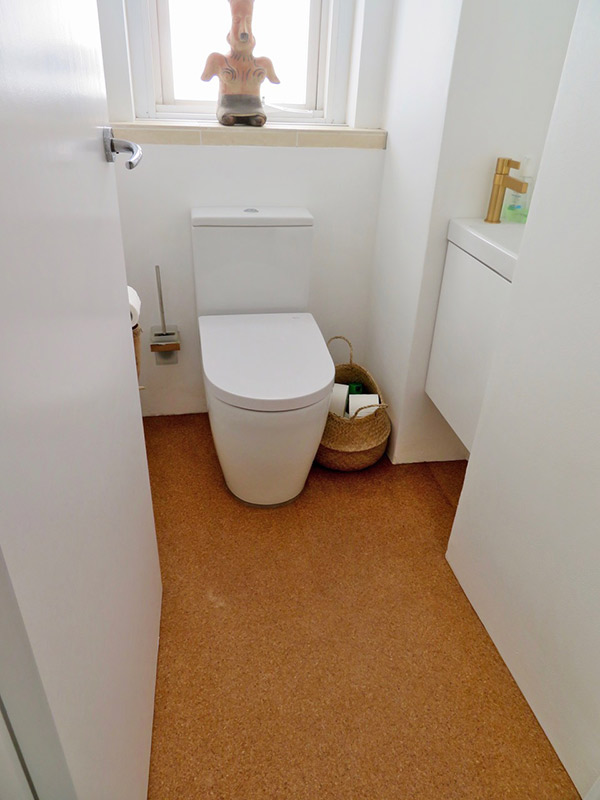
Comfort and Warmth: Why My Feet Love Cork
The comfort factor of cork flooring completely exceeded my expectations. Unlike cold ceramic tile that sends chills through your body on winter mornings, cork feels warm and cushioned underfoot. The natural insulation properties mean the surface temperature stays much closer to room temperature, making those barefoot trips to the bathroom far more pleasant, especially during colder months.
I was amazed by how much softer cork feels compared to hard surface flooring options. The cellular structure provides natural cushioning that reduces fatigue when standing for extended periods, which I appreciate during my morning routine. My kids also love the softer surface, and I worry less about slips and falls because cork provides better traction than smooth tile surfaces, even when wet.
The acoustic benefits surprised me as well. Cork naturally absorbs sound, so footsteps are much quieter than they were with our previous tile floor. This has been especially beneficial in our master bathroom, where early morning or late-night bathroom visits no longer wake up my spouse. The sound dampening also makes the bathroom feel more serene and spa-like, contributing to a more relaxing atmosphere.

Maintenance and Cleaning: Simpler Than Expected
I was worried that cork would require complicated maintenance routines, but I’ve found it surprisingly easy to care for. Daily cleaning involves nothing more than sweeping or vacuuming to remove debris, followed by damp mopping with a mild cleaner. The key is avoiding excess water, which means wringing the mop well and allowing the floor to air dry quickly with good ventilation.
The antimicrobial properties of cork mean I don’t have to worry about bacteria or mold growth like I did with our previous tile and grout combination. Grout lines were constantly requiring scrubbing and resealing, but cork’s smooth surface wipes clean easily. I use a pH-neutral cleaner specifically designed for cork floors, though mild dish soap diluted in water works just as well for regular cleaning.
Resealing the floor is the most significant maintenance requirement, and I plan to do this every three to five years, depending on wear patterns. The process involves lightly sanding the surface and applyinga fresh polyurethane finish. While this sounds intimidating, it’s actually simpler than regrouting tile or refinishing hardwood floors. The ability to refresh the surface means the flooring can look new again with relatively minimal effort and expense.
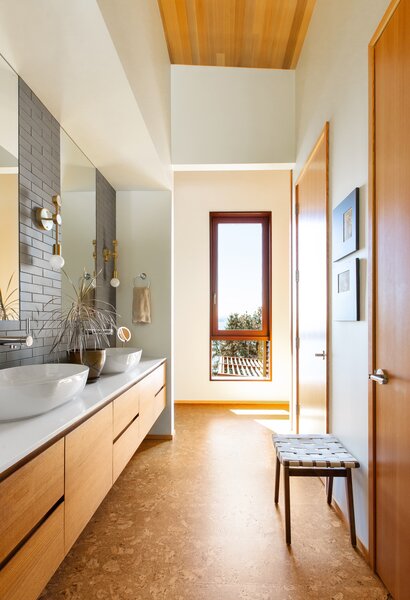
Design Flexibility: Achieving the Look I Wanted
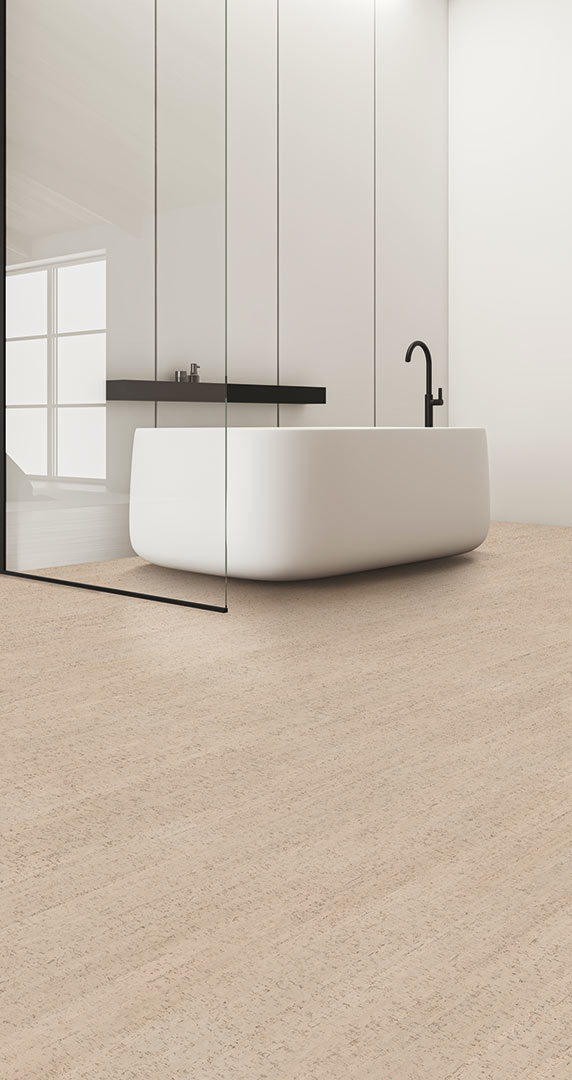
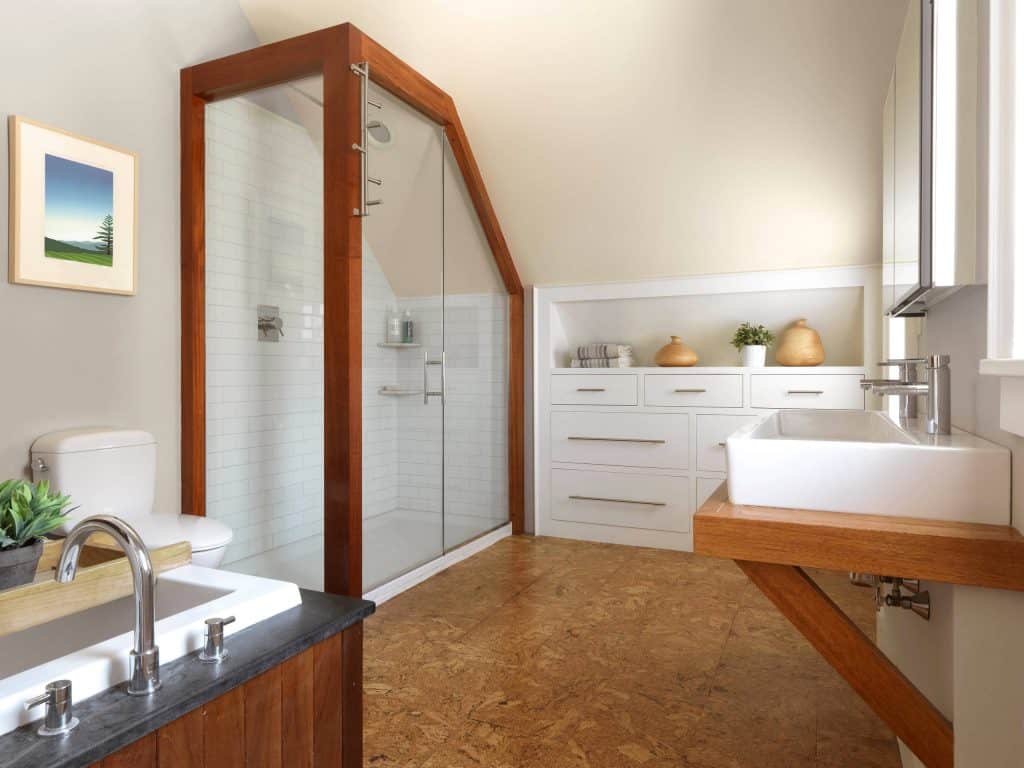
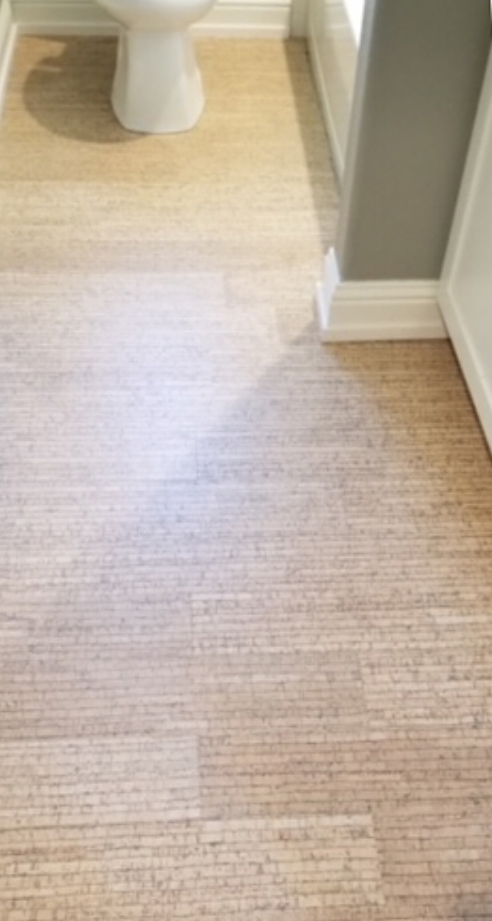
Cork flooring offers more design options than I realized when I first started exploring this material. I was initially concerned that cork would look too uniform or boring, but modern cork products come in numerous colors, patterns, and textures. I chose a medium-toned cork with subtle grain variation that complements my bathroom’s neutral color scheme perfectly.
The natural variations in cork create visual interest without being overwhelming or busy. Each plank has unique characteristics that add personality to the space, similar to natural hardwood but with better moisture resistance. I love how the organic patterns and warm tones create a spa-like atmosphere that feels both sophisticated and welcoming.
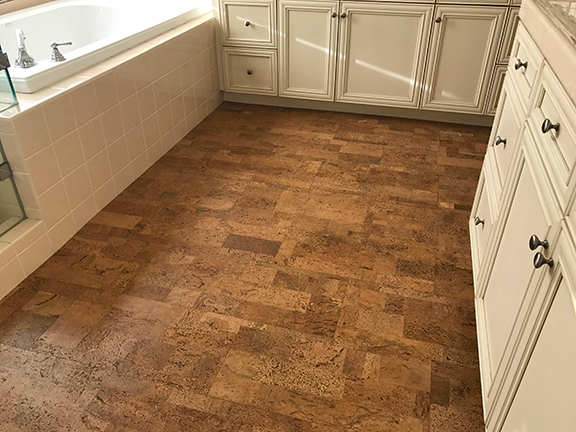
Installation patterns also offer design flexibility. While I chose a traditional plank layout, cork tiles can be arranged in various patterns like herringbone or brick layouts. The material can even be cut to create custom borders or design elements. Some manufacturers offer cork with printed designs or stained finishes that mimic other materials while maintaining cork’s beneficial properties, giving homeowners even more creative possibilities.
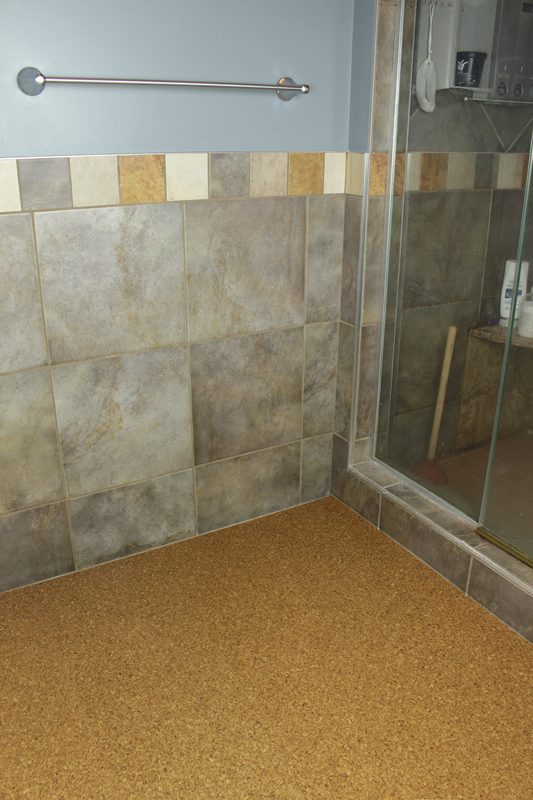
Long-Term Performance: My Honest Assessment
After eight months of daily use, I’m impressed with how well my cork bathroom floor has held up. The high-traffic areas around the sink and shower show minimal wear, and the overall appearance remains consistent with installation day. I was particularly concerned about water damage around the toilet and shower, but proper sealing and regular maintenance have prevented any issues.
The floor has handled everything my family has thrown at it, from hair products and makeup spills to standing water from shower splashing. Quick cleanup prevents staining, and the polyurethane finish provides excellent protection against most household chemicals and personal care products. I haven’t noticed any fading or discoloration despite the bathroom’s large window that lets in plenty of natural light.
One minor issue I’ve experienced is a slight indentation from heavy objects, like when I dropped a large shampoo bottle. However, cork’s natural resilience means these dents gradually bounce back over time, especially in warm conditions. This self-healing property is unique among flooring materials and helps maintain the floor’s appearance despite normal wear and tear. Overall, I expect this floor to last many years with proper care.
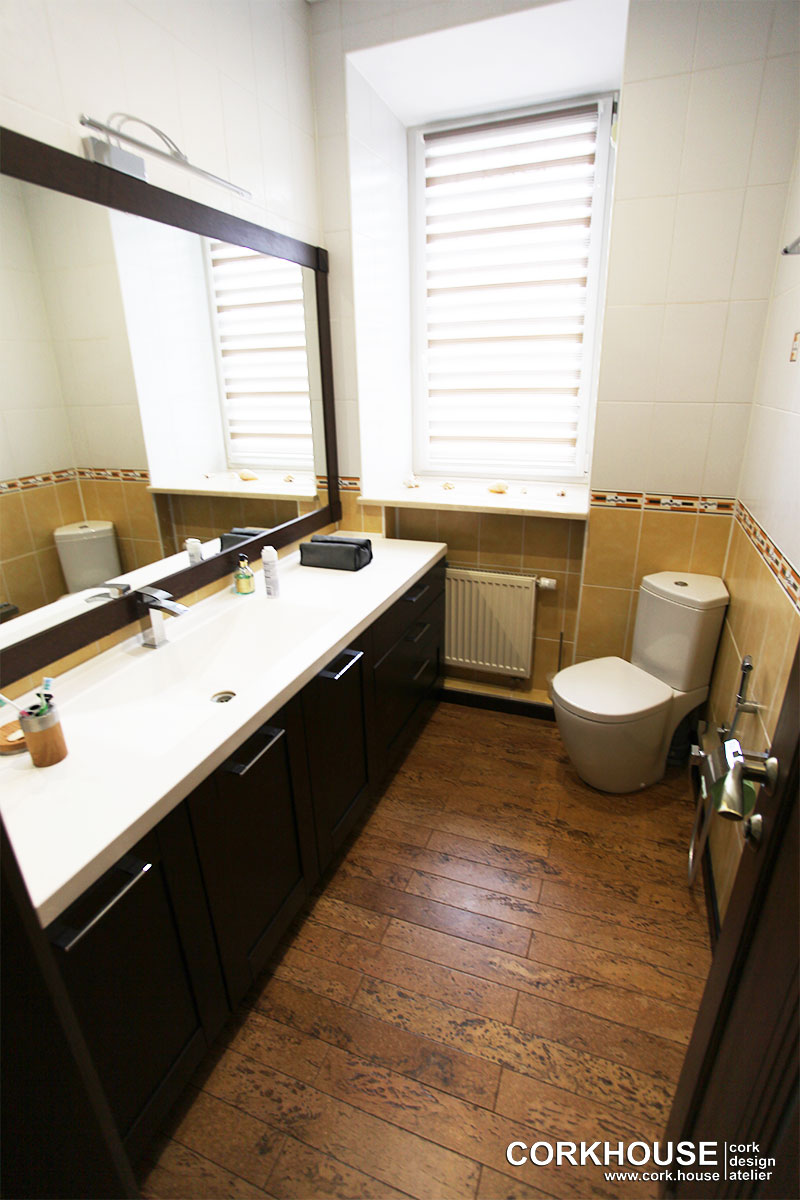
Is cork flooring really suitable for bathrooms, considering all the moisture and humidity?
Yes! I was skeptical too, but cork is naturally water-resistant due to suberin, a waxy substance in its cells. With proper sealing and installation of a vapor barrier, my cork bathroom floor has handled daily moisture beautifully for eight months. The key is good ventilation and quick cleanup of standing water, just like any bathroom floor.
How much did cork flooring cost compared to other bathroom flooring options?
My cork flooring cost about $8 per square foot installed, which falls between luxury vinyl and high-end tile. While more expensive than basic vinyl, it’s comparable to quality ceramic tile when you factor in installation. The comfort, warmth, and unique properties make it worth the investment, plus it can be refinished to extend its life.

Does cork flooring feel soft and squishy underfoot, or is it firm like hardwood?
Cork feels wonderfully cushioned but not squishy. It has natural give that’s comfortable for standing and reduces foot fatigue, yet it’s firm enough to feel stable and secure. Think of it as softer than hardwood but firmer than carpet. The cellular structure provides just enough cushioning to make bare feet comfortable on cold mornings.
How difficult is it to maintain cork flooring in a bathroom environment?
Maintenance is actually simpler than tile and grout! Daily cleaning involves sweeping and damp mopping with pH-neutral cleaner. The antimicrobial properties mean no scrubbing grout lines or worrying about mold. Resealing every 3-5 years is the biggest maintenance task, but it’s easier than refinishing hardwood or replacing worn tile.
Will cork flooring show water damage or staining from typical bathroom products?
With proper sealing, my cork floor resists water damage and most stains. Hair products, makeup, and toiletries wipe away easily from the polyurethane finish. I clean spills quickly as a precaution, but nothing has permanently stained. The natural color variations in cork also help camouflage minor wear better than solid-colored materials.
Can cork flooring handle the weight of bathroom fixtures and furniture without denting?
Cork handles normal bathroom loads well. Heavy fixtures should have protective pads, just like any flooring. I’ve noticed minor indentations from dropped items, but cork’s resilience means these gradually disappear over time. It’s more forgiving than hardwood and doesn’t crack like tile. For permanent fixtures, we used wider distribution pads during installation.

Can Cork Flooring Be Installed in A Bathroom?
Best Natural Floors for Bathrooms
Best Natural Floors for Bathrooms
Related articles: