I’ve transformed dozens of garage floors from oil-stained concrete eyesores into stunning, functional surfaces that homeowners actually enjoy spending time on. What started as a simple quest to upgrade my own workshop floor turned into a passion for helping clients create multi-purpose spaces that serve as workshops, home gyms, entertainment areas, and pristine car storage. Over the years, I’ve experimented with everything from basic epoxy coatings to luxury interlocking tiles, learning which solutions provide the best combination of durability, aesthetics, and value for different lifestyles and budgets.
Epoxy Coating Systems and Applications
Epoxy floor coatings have become my most popular recommendation because they transform concrete surfaces into durable, chemical-resistant floors that rival commercial-grade installations. I typically use two-part epoxy systems that chemically bond to properly prepared concrete, creating seamless surfaces that resist oil stains, chemicals, and heavy traffic. The key to successful epoxy installation lies in meticulous surface preparation, including diamond grinding and acid etching, which ensures optimal adhesion and long-term performance.
Color options and decorative effects make epoxy coatings incredibly versatile for different garage aesthetics and functional requirements. I love working with clients to create custom color schemes using solid colors, metallic effects, or decorative flake systems that hide dirt and add visual interest. The flake systems are particularly practical because they provide slip resistance while camouflaging wear patterns that develop over time in high-traffic areas.
Professional-grade epoxy systems offer superior durability compared to DIY kits, though they require more investment and expertise for proper installation. I’ve seen too many failed DIY epoxy jobs where inadequate surface prep or poor mixing ratios led to peeling and failure within months. Quality professional installations can last 10-15 years with proper maintenance, making them excellent long-term investments for homeowners serious about garage functionality and appearance.

Interlocking Tile Solutions
Modular garage tiles have revolutionized garage flooring by providing DIY-friendly installation without permanent commitment to specific floor treatments. I recommend high-quality polypropylene tiles for most applications because they resist chemicals, provide cushioning underfoot, and allow air circulation that prevents moisture buildup under the flooring system. The interlocking design means damaged tiles can be replaced individually without affecting the entire floor installation.
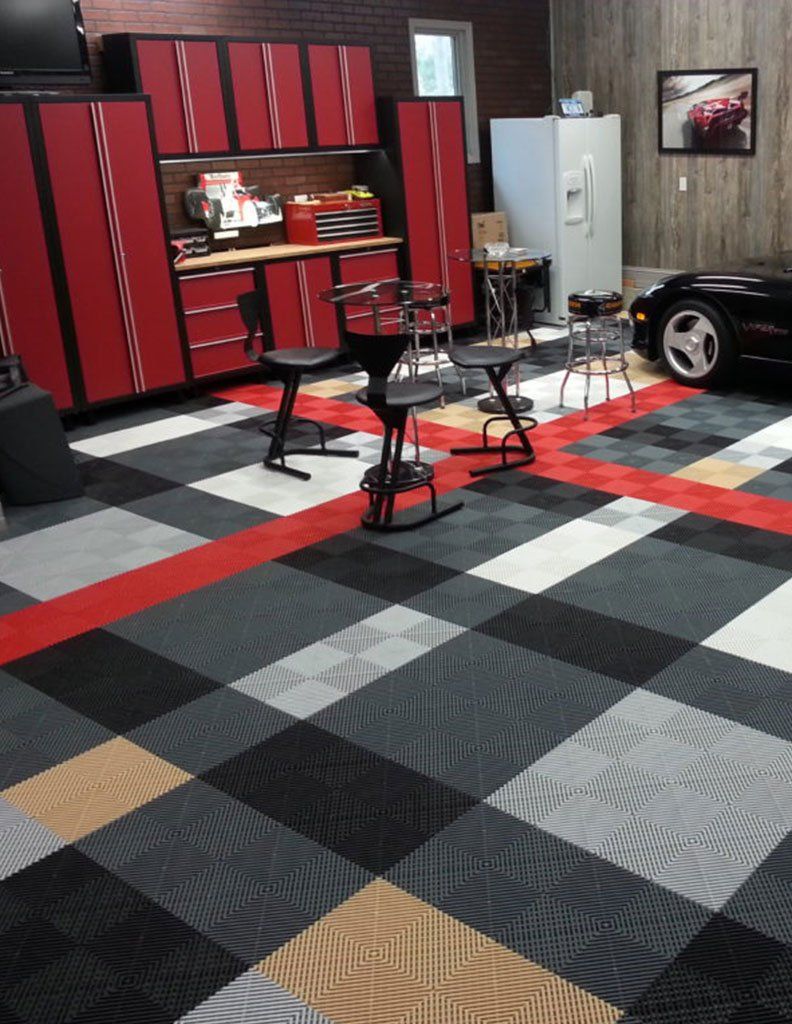
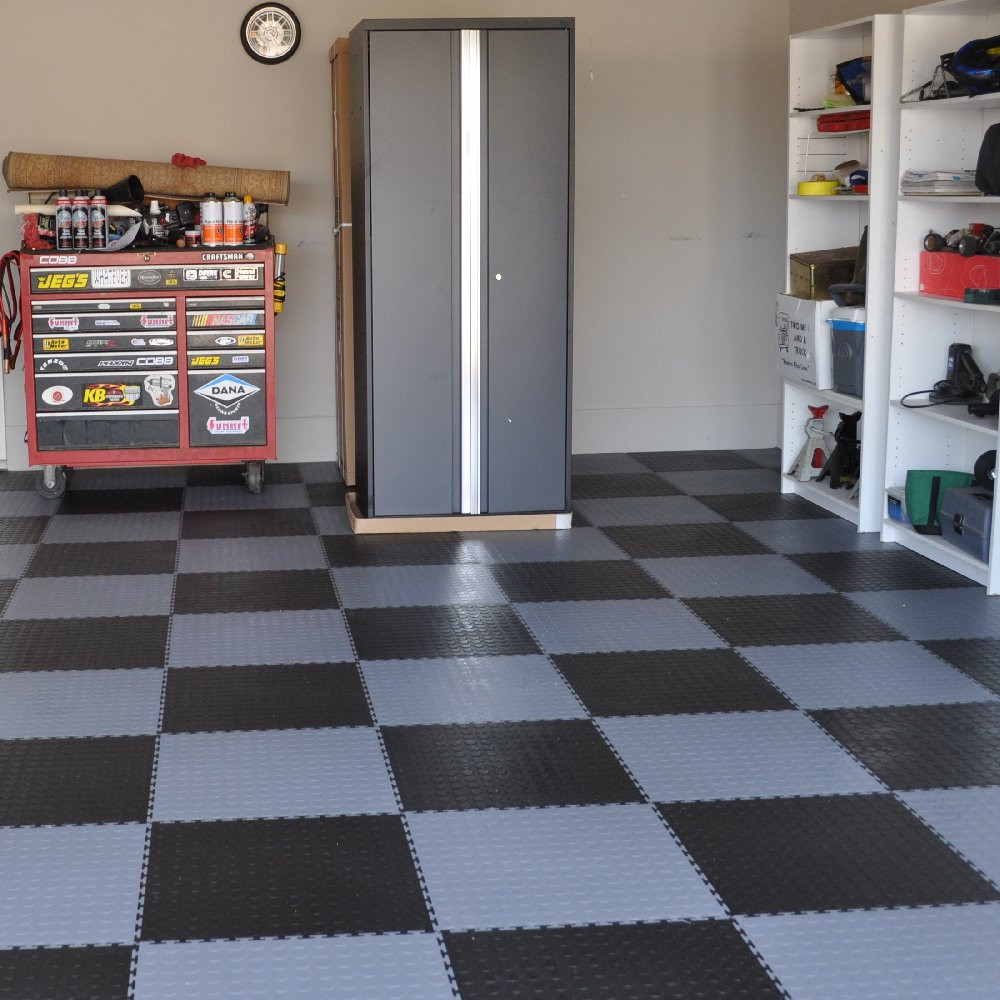
Color and pattern combinations offer endless customization possibilities that let homeowners express personal style while creating functional zones within garage spaces. I often design checkerboard patterns using contrasting colors or create borders and accent areas that define workspace boundaries. Racing stripes, geometric patterns, and solid color installations all work well, depending on the desired aesthetic and garage usage patterns.
Installation requires minimal tools and can typically be completed in a weekend, making these tiles appealing for homeowners who want dramatic results without major renovation commitments. I appreciate how the raised design allows water and debris to drain underneath, keeping the surface dry and providing better traction than smooth concrete. The modular nature also means homeowners can reconfigure patterns or take tiles with them if they move to different properties.
Polished Concrete Finishes
Polished concrete transforms existing garage floors into sophisticated surfaces that rival expensive stone installations while maintaining the durability concrete provides. I use diamond grinding systems to progressively smooth concrete surfaces, working through increasingly fine grits to achieve mirror-like finishes that reflect overhead lighting beautifully. The process densifies the concrete surface, making it more durable and resistant to dusting that plagues unsealed concrete floors.
Decorative options include integral color, acid staining, and aggregate exposure that create unique patterns and color variations throughout the polished surface. I particularly enjoy projects where we expose decorative aggregates or create geometric patterns using different concrete pours. These techniques result in one-of-a-kind floors that showcase concrete’s artistic potential while providing superior functionality for garage applications.
Maintenance requirements are surprisingly minimal for polished concrete, requiring only periodic cleaning with neutral pH cleaners and occasional resealing depending on traffic levels. I’ve maintained polished garage floors that still look stunning after five years with nothing more than regular cleaning and annual sealing. The long-term cost-effectiveness makes polished concrete an excellent choice for homeowners planning to stay in their homes long-term.

Rubber Flooring Options
Commercial-grade rubber flooring provides exceptional comfort and safety for garage workshops, home gyms, and areas where people spend extended periods standing or working. I recommend rubber tiles or rolled goods that offer superior cushioning compared to hard surface alternatives while providing excellent chemical resistance and easy maintenance. The non-slip properties make rubber particularly valuable in areas where water or automotive fluids might create slippery conditions.
Installation methods vary between loose-lay tiles that require no adhesive and fully adhered systems that provide permanent installations. I prefer loose-lay systems for most garage applications because they allow easy removal for cleaning or reconfiguration as needs change. The tiles interlock securely enough to prevent shifting during normal use while maintaining the flexibility that makes rubber flooring so practical for multi-use garage spaces.
Sound-dampening qualities make rubber flooring excellent for attached garages where noise transmission to living spaces concerns homeowners. I’ve installed rubber floors in garage workshops where the reduced noise levels allowed hobbyists to work early mornings or late evenings without disturbing family members. The thermal insulation properties also provide more comfortable working conditions in garages without climate control systems.

Stained and Sealed Concrete
Acid staining creates beautiful, natural-looking color variations that transform plain concrete into surfaces resembling natural stone or aged leather. I use multiple stain colors and application techniques to create depth and visual interest that makes each floor unique. The chemical reaction between acid stains and concrete produces permanent color changes that won’t peel or fade like surface-applied coatings might over time.
Water-based stains offer more predictable color results and broader color palettes when clients want specific hues or brighter colors than acid stains can provide. These stains penetrate concrete surfaces effectively while avoiding the harsh chemical odors and safety concerns associated with acid-based products. I often combine different stain types in single projects to achieve complex color relationships that create truly custom appearances.
Sealing stained concrete protects the color while providing easy maintenance and enhanced durability for garage applications. I typically apply penetrating sealers that protect without creating glossy surface films that might become slippery when wet. The sealing process also reduces concrete’s natural porosity, making it less susceptible to oil stains and easier to clean during regular maintenance.

Budget-Friendly DIY Solutions
Paint systems designed specifically for concrete floors provide affordable transformation options for homeowners working with limited budgets. I recommend epoxy-fortified concrete paints that offer better adhesion and durability than standard latex paints while remaining accessible for DIY installation. Proper surface preparation remains critical even with paint systems, requiring thorough cleaning and etching for optimal results.
Concrete overlays allow DIY enthusiasts to repair damaged floors while creating new surfaces for decorative treatments. I’ve helped homeowners apply thin polymer overlays that smooth rough concrete and provide ideal substrates for painting, staining, or other decorative techniques. These products require careful mixing and application, but can dramatically improve severely damaged concrete at reasonable costs.
Maintenance strategies can extend the life of budget flooring solutions significantly when homeowners commit to regular care routines. I teach clients simple cleaning techniques and protective measures that preserve their flooring investments, such as using absorbent mats in high-traffic areas and addressing spills promptly. With proper care, even basic paint systems can provide years of improved appearance and functionality.

How long does epoxy garage floor coating typically last?
Professional epoxy installations usually last 10-15 years with proper maintenance, while DIY kits might last 2-5 years depending on preparation quality and traffic levels. The key factors are thorough surface preparation, quality materials, and proper application techniques. Heavy vehicle traffic and chemical exposure can reduce lifespan, but regular cleaning and protective measures help maximize durability.
Can I install garage flooring over existing cracks or damaged concrete?
Minor cracks can often be repaired before flooring installation, but extensive damage may require professional concrete repair or overlays first. I recommend evaluating crack causes and addressing underlying issues before installing any flooring system. Some tile systems can bridge minor imperfections, while coatings require smooth, stable substrates for optimal performance and longevity.

What’s the best garage flooring for areas with temperature extremes?
Interlocking tiles and rubber flooring handle temperature fluctuations better than rigid coatings that may crack with expansion and contraction. Epoxy systems designed for exterior use also perform well in unheated garages. Avoid basic paint systems in areas with extreme temperature swings. Proper substrate preparation and quality materials are essential regardless of climate conditions.
How do I maintain different types of garage flooring?
Most garage floors require regular sweeping and periodic mopping with appropriate cleaners. Epoxy coatings clean easily with mild detergents, while rubber and tile systems may need specialized cleaners. Avoid harsh chemicals that could damage surfaces. Prompt cleanup of automotive fluids and regular resealing of concrete-based systems help maintain appearance and performance over time.

Can garage flooring be installed in sections or does it need to be done all at once?
Tile systems install easily in sections and can be expanded over time as budgets allow. Coating systems like epoxy work best when applied to entire areas at once to ensure consistent appearance and performance. Concrete staining can sometimes be done in phases with careful planning. Consider your timeline and budget when choosing flooring types.
What’s the most cost-effective garage flooring option?
Quality concrete paint offers the lowest upfront cost, while interlocking tiles provide good value for DIY installation. Epoxy coatings cost more initially but offer better longevity. Consider the total cost over the expected lifespan rather than just the initial expense. Sometimes spending more upfront results in lower long-term costs and better satisfaction with the results.
Garage Floors on Garage Flooring Ideas Garage

Easy and Affordable Garage Floor Options Garage floor paint

Garage Flooring Ideas rubber garage flooring, flooring

Amazing Garage Floor Tile Designs Garage floor tiles, Floor

Rubber Garage Flooring Ideas Garage floor tiles, Rubber garage

Garage Flooring Ideas For Men – Paint, Tiles And Epoxy Coatings

Garage Flooring Ideas For Men – Paint, Tiles And Epoxy Coatings

Related articles: